

$39.00
Checking availability
See if it's really the one
Search with this product to compare it, find similar styles, or turn up something better before deciding.
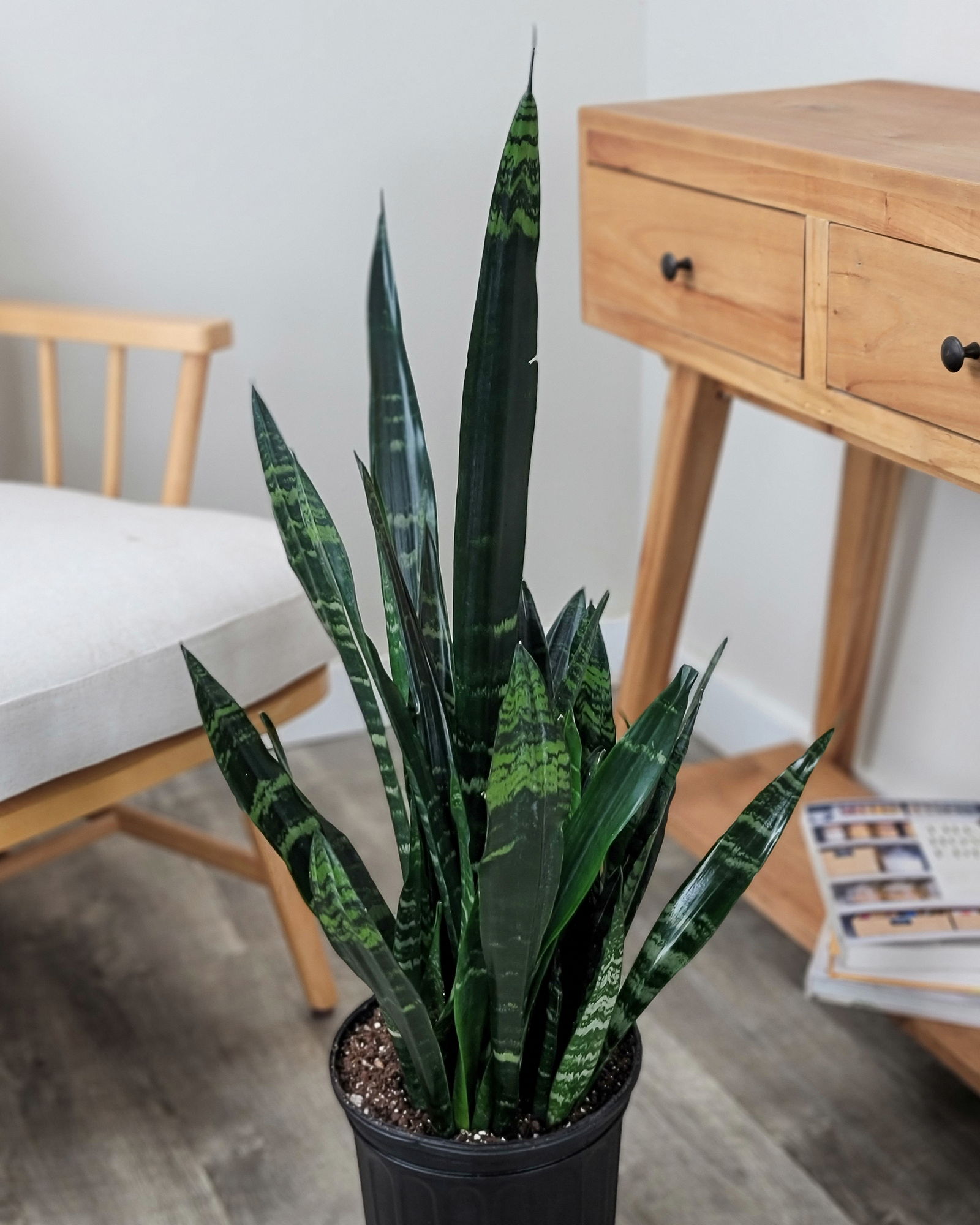
The Snake Plant that is guaranteed to make a Splash Native to West Africa, ‘Black Coral’ thrives in a variety of light conditions, from low to bright indirect light, making it an ideal choice for both homes and offices. This hardy plant prefers well-draining soil and a moderate watering schedule, allowing the soil to dry between waterings to prevent root rot. In addition to its visual appeal, Sansevieria trifasciata ‘Black Coral’ is known for its air-purifying properties, effectively removing toxins such as formaldehyde, benzene, and xylene from indoor environments. Its low-maintenance requirements and air-cleaning abilities make this snake plant cultivar a popular choice among plant enthusiasts of all levels. Caring for your Black Coral Snake Plant The Black Coral Sansevieria, also known as the Snake Plant, is a popular indoor plant that is loved for its beautiful, variegated leaves and ease of care. As the name suggests, this plant belongs to the Sansevieria family and is native to West Africa. Caring for a Black Coral Sansevieria is relatively easy and straightforward. The plant requires moderate to bright light, infrequent watering, well-draining soil, and occasional fertilization. With proper care, this beautiful and low-maintenance plant can thrive for many years. Here are some tips on caring for your Black Coral Sansevieria. Light The Black Coral Sansevieria can tolerate a range of lighting conditions, from low to bright indirect light. However, it is important to note that too much direct sunlight can burn the leaves, so it is best to avoid placing the plant in direct sunlight for extended periods of time. A bright spot with some filtered light, such as near a window, is ideal. Watering One of the most common mistakes people make when caring for their Black Coral Sansevieria is overwatering. This plant prefers to dry out completely between waterings and can even tolerate periods of drought. As a rule of thumb, water the plant once every two weeks during the growing season (spring and summer) and once every four to six weeks during the dormant season (fall and winter). It is important to use well-draining soil and a pot with drainage holes to prevent water from sitting in the soil and causing root rot. Soil and Potting The Black Coral Sansevieria does well in a variety of soil types, including cactus mix, succulent mix, or a combination of regular potting soil and sand. When potting your plant, be sure to choose a pot that is one size larger than the current pot and has drainage holes. The plant can become root-bound, so it may need to be repotted every two to three years. Humidity The Black Coral Sansevieria does not require high humidity and can tolerate dry air. However, it is important to avoid placing the plant near heating or cooling vents, as these can cause fluctuations in temperature and humidity. Fertilizer The Black Coral Sansevieria does not require frequent fertilization, but a light feeding during the growing season can help promote healthy growth. Use a balanced, water-soluble fertilizer and dilute it to half the recommended strength. Fertilize the plant once every two to three months. Propagation The Black Coral Sansevieria can be propagated by division or by leaf cuttings. To propagate by division, carefully remove the plant from its pot and separate the root ball into two or more sections, making sure each section has healthy roots and foliage. Repot each section in a separate pot and water lightly. To propagate by leaf cuttings, cut a leaf into sections and plant them in moist soil. Keep the soil moist but not wet and place the pot in a bright, warm spot. New growth should appear within a few weeks. Pests and Diseases The Black Coral Sansevieria is generally a hardy plant that is resistant to pests and diseases. However, it can be susceptible to root rot if overwatered or if planted in soil that does not drain well. Mealybugs and spider mites can also infest the plant, particularly if it is placed in a dusty or humid environment. If you notice any signs of pest infestation, such as yellowing leaves or webbing, isolate the plant and treat it with an insecticidal soap or horticultural oil.
Have a question about this?
We currently ship within the US, with more countries coming soon.
Final cost and dates are confirmed at checkout.
🇺🇸 Ship from USA · On Agora since 2026
$39.00