

$129.50
See if it's really the one
Search with this product to compare it, find similar styles, or turn up something better before deciding.
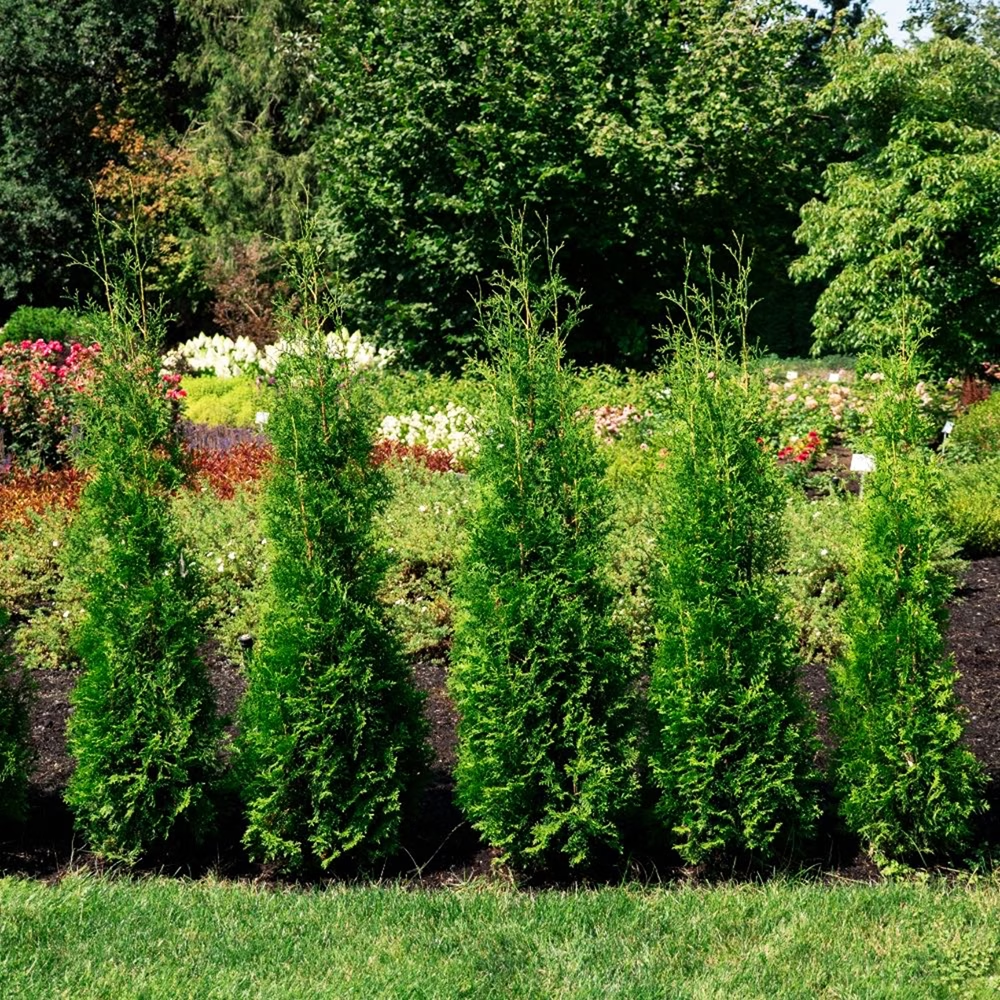
Screening is usually the first thing you need in a new garden, whether it’s from neighbors, busy roads, or as protection from wind and snow. If you live in a colder zone, one of the most popular choices is the arborvitae, or eastern white cedar, a tough, winter-hardy evergreen that even tolerates wet soil. The trouble is, this plant is not particularly fast-growing, and 6 inches a year is typical for most varieties. Unless of course you use your own plane. If that isn’t possible, then we recommend the Private Jet® Arborvitae. With double that growth rate – a full foot a year – it’s going to make a hedge that really takes off. It’s growth is dense enough to make a solid screen without any trimming, or you can trim it in the traditional way to make a dense, flat-faced hedge. Relatively slender, it also makes great specimens and vertical accents. While there are speed advantages from using fast-growing deciduous trees, like willow, a screen that is bare all winter is really only half a screen, and those kinds of trees don’t have a long life either. Evergreen conifers offer the best way for permanent screening, and with it’s accelerated growth rate, flying Private Jet® is definitely the classy way to go. Using the Private Jet™ Arborvitae in Your Garden If you start off with our 4-5 foot plants, within 5 years you will have a fabulous 10-foot hedge or screen you can be proud off. Adding a foot a year when young, it will soon mature as much as 20 feet tall if you need that kind of height, or it can easily be trimmed to keep it anywhere above 6 feet tall. For a screen, space plants between 2 and 4 feet apart, using a closer spacing for a shorter hedge. For a really dense, wind and noise-proof screen, plant a double row, spacing the plants 5 feet apart in the row, with each plant in the space between the plants in the other row, which should be 4 feet from the first row. If you are planting along a fence or property line, set the first row 3 feet from the fence or boundary. You can also use the Private Jet® Arborvitae as an accent or specimen plant, perhaps on either side of a door or gate, out on a lawn alone or in a group of three, or in shrub beds for a vertical accent. Use it in the corners of a small yard, or in the angles of a blank wall. It will look great even untrimmed, but for maximum formal affect, trim at least once a year. It could also be planted in a large tub, and used in a courtyard or on a terrace. Plant it alone or grow trailing plants like ivy or periwinkle, or annual flowers, at the base Growing the Private Jet™ Arborvitae Size and Appearance The Private Jet® Arborvitae is an upright evergreen conifer tree, growing about 12 inches a year to a height between 15 and 20 feet. It has a strong vertical pattern of growth, spreading at its widest to no more than 4 or 5 feet, even if not trimmed. Older plants continue to grow, and may, if untrimmed, reach as much as 30 feet tall in time. Trimmed plants can be kept considerably smaller if wanted, but the growth is dense and trimming isn’t necessary for a good appearance. For hedges and screens it is best to have multiple trunks, so trim the top from time to time as it grows to encourage that. For a vertical specimen try to keep a single stem as the central growth for as long as possible. The emerald green foliage grows in upright, arching sprays, with the tiny individual leaves clinging flat on the young branches, creating a soft, no-spiny feel. If crushed or cut the foliage releases a pleasant, spicy, ‘evergreen’ aroma. The strong, vertical growth pattern persists, keeping this plant noticeably more dense and narrow than most other arborvitae. Old trees that have not been trimmed may eventually produce clusters of round, olive-sized cones that are green, turning brown as they mature. Trimmed plants rarely if ever produce cones. Hardiness The Private Jet® Arborvitae is one of the most cold-resistant evergreens available, being completely hardy and untouched by cold even in zone 3. The foliage stays green through winter, with little or no bronzing. It grows well in cooler parts of the country, into zone 7, but isn’t suitable for areas with hot, humid summers, or dry regions. Sun Exposure and Soil Conditions For the best growth, plant the Private Jet® Arborvitae in full sun, or in a location with no more than a couple of hours of shade each day. It will grow in more shade, but growth will be more open, and slower. It grows well in almost all soils, including heavier clays and ones that are damp to wet, but won’t grow well in stagnant, low-oxygen soil conditions. It does well beside the running water of streams or lakes, but grows just as well in average garden conditions. Once well-established it tolerates ordinary periods of summer drought, but won’t do well in places that are constantly dry. Add plenty of rich compost when planting, use mulch, and water young plants frequently for good growth. Maintenance and Pruning Deer won’t eat the Private Jet® Arborvitae, and it almost never has any significant pest or disease problems. Any issues are usually traceable to poor, dry soil, too much shade, or very hot growing conditions. Trimming can be done anytime after the first spring flush of growth has matured and darkened a little. Avoid trimming after early fall, as new growth could be damaged in a harsh winter – it can easily be trimmed off in spring if that should happen. Use well-maintained, sharp trimmers to avoid ragged edges that may brown. History and Origin of the Private Jet™ Arborvitae Eastern white cedar, Thuja occidentalis, grows wild throughout the northeast, and into Canada, as well as in Illinois and Ohio. It is typically seen in the wild growing along the edges of wetlands and swampy, low-lying areas. The name Arborvitae means ‘Tree of Life’, and was given to it by the 16th century French explorer Jacques Cartier. When his ship and crew were trapped in the St Lawrence river during the winter they were saved from scurvy by native Americans giving them a tea made from the leaves of white cedar – it has more Vitamin C than oranges. The variety called ‘King of Brabant’ was discovered in 2008 by Wilfried Oltmanns at his nursery in Edewecht, Germany. While working he spotted an unusual branch growing on an older variety called ‘Brabant’. It has tighter, more compact growth which continued in plants he propagated from the branch. He named it ‘King of Brabant’ and patented it in America in 2018. It is released in America by the Bloomin’ Easy brand, with the licensed trademark name of Private Jet®. Buying the Private Jet™ Arborvitae at The Tree Center For some of the fastest growth we have seen from eastern white cedar, choose the Private Jet® Arborvitae. You don’t even need to trim, it grows so tight and so vertical, shooting up like a jet. It’s a top pick for screening, hedging and as accent specimens, so don’t hesitate to order – we will jet them over as fast as possible, before they are all gone.
Have a question about this?
We currently ship within the US, with more countries coming soon.
Final cost and dates are confirmed at checkout.
🇺🇸 Ship from USA · On Agora since 2026
$129.50