See if it's really the one
Search with this product to compare it, find similar styles, or turn up something better before deciding.
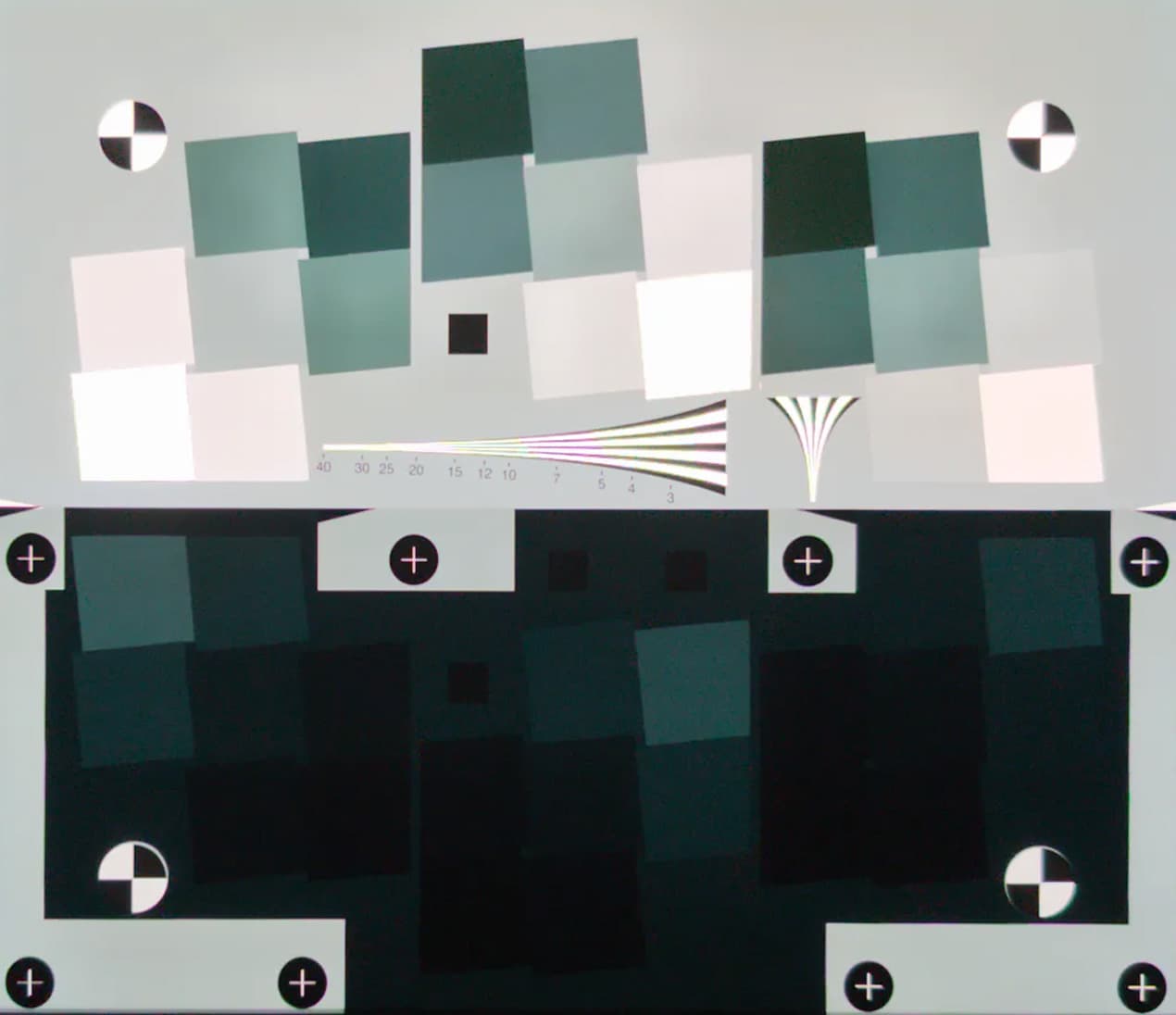
InfoDR analysis is available in Imatest 26.1.4+ and uses information-capacity-related metrics, including C4, to characterize camera performance across chart density or exposure levels. Information-based dynamic range testing Traditional dynamic range measurements are often based on signal-to-noise ratio measured from density patches. These measurements are useful, but they do not fully describe how much usable image detail remains as signal levels decrease. The Imatest InfoDR chart and analysis extend dynamic range testing by incorporating both noise and edge sharpness. This allows the analysis to estimate information capacity across exposure or density levels, providing a more image-quality-relevant view of camera performance. This two-layer transmissive film chart is comprised of 42 patches and 48 slanted edges, with a total density range of 5.2 or 104 dB. InfoDR is designed to help answer questions such as: How much usable detail remains in low-signal regions? How does camera performance change across exposure levels? How do noise, sharpness, signal processing, and optical flare affect practical dynamic range? How does one camera system compare with another using an information-based image quality metric? Recommended users InfoDR is best suited for teams with controlled lab setups and experience with camera image quality testing. It is particularly useful for customers who already work with Imatest dynamic range, SFR, eSFR ISO, or other advanced image quality measurements. InfoDR may not be the best first choice for users who need a simple production pass/fail chart or a mature standardized dynamic range workflow. For those cases, Imatest’s established 36-patch Dynamic Range charts may be more appropriate. Test setup considerations Because InfoDR incorporates edge response, setup quality is important. For best results: Use raw or minimally processed images where possible. Ensure the chart is accurately focused. Avoid clipping or severe underexposure. Use appropriate bit depth for dark-signal analysis. Confirm distortion correction settings. Use controlled, uniform illumination. Minimize stray light, flare, ghosting, and reflections. Review the optical path carefully when using relay lenses, folded optics, or collimators. InfoDR results can be sensitive to optical flare and stray light. This sensitivity can be useful because it reflects real camera-system behavior, but it also means that fixture design and optical setup should be reviewed carefully when interpreting results. Relationship to traditional dynamic range charts InfoDR is not simply a replacement for conventional dynamic range targets. It provides a different type of measurement based on information capacity. Traditional dynamic range charts remain useful for measuring tonal response, noise, and dynamic range using established patch-based methods. InfoDR is intended to complement these workflows by adding information about usable detail across exposure levels. For conservative production workflows, standard Imatest Dynamic Range charts may still be the preferred choice. For advanced R&D and engineering evaluation, InfoDR can provide additional insight into how camera systems preserve information under challenging signal conditions. Documentation: White Paper: Image quality testing based on information metrics Using InfoDR: Information-based Dynamic Range, Part 1 Using InfoDR: Information-based Dynamic Range, Part 2 InfoDR (Information-based Dynamic Range) Part 3: Results Image Information Metrics Research: Information Capacity as a Predictor of Perception Performance (Geever D., et. al., 2025) Information-Based Dynamic Range (Koren N., 2026)
Have a question about this?
We currently ship within the US, with more countries coming soon.
Final cost and dates are confirmed at checkout.
🇺🇸 Ship from USA · On Agora since 2026
$1,300.00