See if it's really the one
Search with this product to compare it, find similar styles, or turn up something better before deciding.
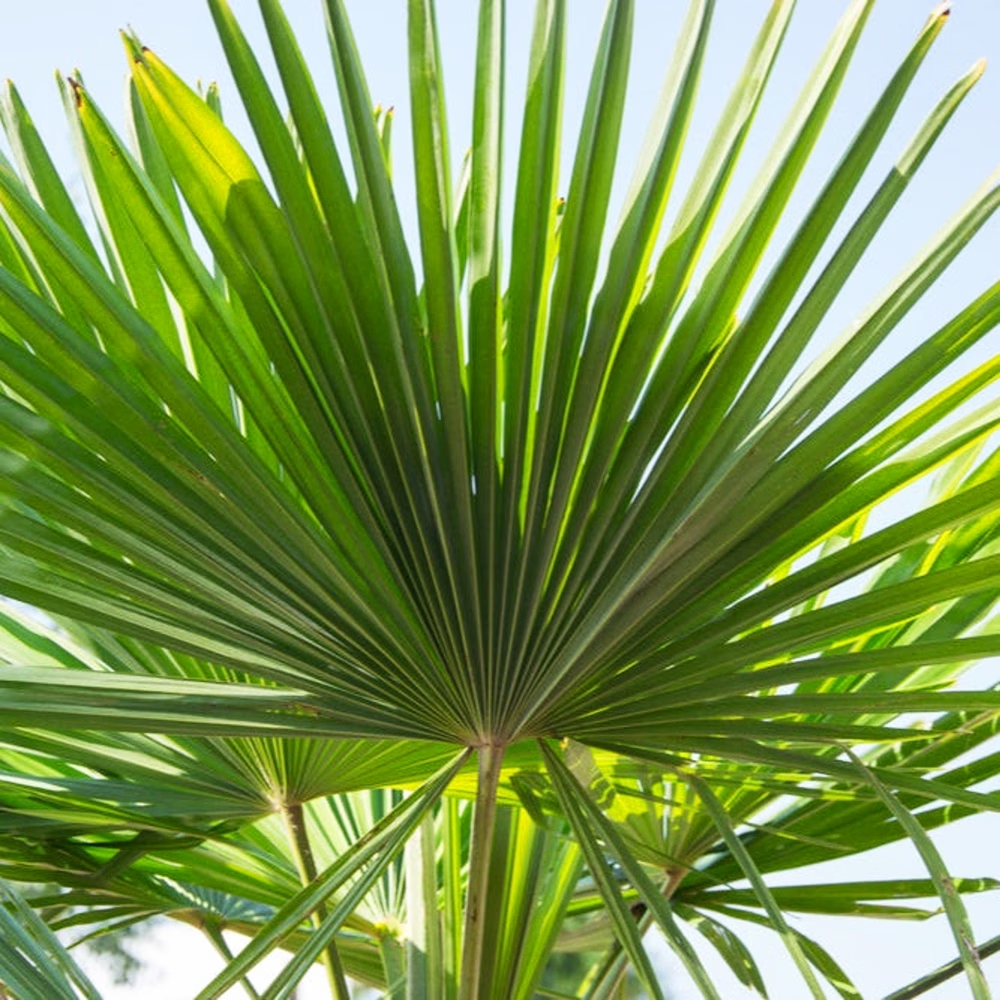
The Dwarf Palmetto Palm proves that you don’t need a tropical climate to enjoy the dramatic beauty of palm trees in your landscape. Native to the southeastern United States, this rugged American palm brings lush, fan-shaped foliage and a distinctly tropical appearance to gardens as far north as USDA zone 7. Unlike towering palms that quickly outgrow residential spaces, the Dwarf Palmetto stays low and shrubby for many years, making it far easier to incorporate into foundation plantings, woodland gardens, pondsides, and mixed borders. Its ability to tolerate cold, wet soils, drought, shade, and humidity all at once makes it one of the toughest and most adaptable palms you can grow. The large emerald-green leaves rise directly from a mostly underground trunk, creating the look of a dense tropical mound rather than a tall tree. Over time, mature plants may slowly develop a short above-ground trunk, but the foliage always remains the star of the show. In summer, established plants produce large sprays of creamy-white flowers that later develop into clusters of dark purple-black berries loved by birds and wildlife. Easy to grow, nearly maintenance free, and highly resilient, the Dwarf Palmetto Palm delivers year-round structure and texture in places where many exotic-looking plants simply cannot survive. Using the Dwarf Palmetto Palm in Your Garden The Dwarf Palmetto Palm is one of the most useful palms available for landscape design because it functions more like a dramatic evergreen shrub than a traditional tree. Its broad fan-shaped leaves instantly add a tropical, architectural feel to gardens without overwhelming nearby plantings. Since the trunk remains mostly underground for many years, the foliage stays at eye level, making the plant especially effective for adding bold texture and structure in foundation beds, courtyard gardens, woodland edges, and around patios or water features. This palm is especially valuable in difficult planting areas where other ornamental plants may struggle. It thrives in damp low spots, rain gardens, pond edges, and even areas with periodic standing water, yet once established it also handles drought surprisingly well. The plant works beautifully in naturalized settings, coastal gardens, Japanese-inspired landscapes, and tropical-style plantings where its oversized fan leaves contrast dramatically against finer-textured shrubs and perennials. Because it tolerates partial shade, it can also be used beneath taller trees to create an understory planting with a distinctly southern, subtropical character. Growing the Dwarf Palmetto Palm Size and Appearance The Dwarf Palmetto Palm grows as a slow to moderately growing evergreen palm with a dense, shrubby habit and bold fan-shaped foliage. Mature plants typically reach between 4 and 6 feet tall in most garden settings, although older specimens may eventually approach 8 to 10 feet tall when the leaves are fully extended. The spread generally ranges from 4 to 6 feet wide, forming a substantial clump of upright foliage over time. Unlike many palms, the trunk remains largely underground for years, giving the plant its low, bushy appearance. The large palmate leaves are the plant’s defining feature. Each leaf forms a nearly perfect fan divided into many narrow segments and can measure several feet across. The foliage ranges from deep green to blue-green depending on growing conditions and remains attractive throughout the year. Long smooth leaf stalks elevate the foliage above the crown, creating a graceful layered effect. Mature plants produce large branched flower stalks in summer carrying masses of creamy-white flowers, followed by rounded green fruits that mature into glossy purple-black berries by late summer and fall. Hardiness The Dwarf Palmetto Palm is widely regarded as one of the most cold-hardy palms in North America and performs reliably in USDA zones 7 through 10. Established plants can tolerate surprisingly cold winter temperatures compared to most palms, making this species an excellent option for gardeners who want a tropical appearance outside of traditional palm-growing regions. In colder parts of zone 7, some winter leaf burn may occur during severe cold snaps, but established plants typically recover well in spring. This palm also handles heat, humidity, wet conditions, salt exposure, and drought with remarkable ease once established. Its adaptability is one of the reasons it remains so valuable in southeastern and coastal landscapes. Unlike many exotic palms that struggle outside of perfect conditions, the Dwarf Palmetto continues performing reliably across a broad range of climates and soil conditions with very little maintenance required. Sun Exposure and Soil Conditions The Dwarf Palmetto Palm grows well in both full sun and partial shade, making it more versatile than many other palms. In hotter southern climates it performs beautifully with some afternoon shade, while in cooler regions it often thrives in full sun. One of the plant’s greatest strengths is its adaptability to difficult soils and moisture conditions. It tolerates clay, sand, loam, and even periodically flooded soils, while also handling moderately alkaline conditions with ease. Although naturally found in swamps, floodplains, and moist woodlands, this palm becomes moderately drought tolerant once established and can adapt surprisingly well to ordinary garden conditions. Regular watering during establishment encourages faster growth and fuller foliage, but mature plants are highly resilient. Wet winter soils rarely bother this species, making it an excellent choice for rain gardens, low areas, pond margins, and other difficult planting locations where drainage may be inconsistent. Maintenance and Pruning One of the biggest advantages of the Dwarf Palmetto Palm is how little maintenance it requires once established. The plant naturally maintains a tidy, symmetrical form and rarely suffers from pest or disease problems. Deer generally avoid it, and the sturdy evergreen foliage remains attractive throughout the year with minimal attention. Maintenance is mostly limited to removing older leaves as they gradually yellow with age. These can simply be trimmed away close to the base to keep the plant looking fresh and clean. Because growth is relatively slow, pruning needs are infrequent. Established plants typically require no fertilization in average soils, although occasional feeding may encourage faster growth in poor sandy conditions. Its exceptional toughness and adaptability make it one of the easiest palms available for residential landscapes. History and Origin of the Dwarf Palmetto Palm The Dwarf Palmetto Palm, Sabal minor, is native to the southeastern United States and parts of northeastern Mexico, where it naturally grows in swamps, floodplains, moist woodlands, and lowland river terraces. It belongs to the Arecaceae family and is one of only a small number of palm species native to the United States. Its natural range stretches from North Carolina south through Florida and west into Texas and Oklahoma. For centuries, native palms like Sabal minor have played an important ecological role in southern habitats by providing shelter, nesting sites, nectar for pollinators, and fruit for birds and wildlife. The species became increasingly popular in ornamental landscaping because of its unusual combination of tropical appearance and exceptional cold hardiness. Today it remains one of the most widely planted hardy palms for temperate gardens and is especially valued for its ability to succeed in conditions that defeat many other ornamental plants. Buying the Dwarf Palmetto Palm at The Tree Center The Dwarf Palmetto Palm brings bold tropical beauty to gardens far beyond traditional palm-growing regions. Its large fan-shaped leaves, cold hardiness, adaptability to wet and dry soils, and nearly carefree nature make it one of the most dependable and versatile palms available for home landscapes. Whether planted beside water features, beneath trees, in foundation beds, or as a dramatic evergreen accent in mixed borders, this native palm adds year-round structure and texture with minimal maintenance. Order your Dwarf Palmetto Palm from The Tree Center today and enjoy a durable, cold-hardy tropical statement plant for years to come.
Have a question about this?
We currently ship within the US, with more countries coming soon.
Final cost and dates are confirmed at checkout.
🇺🇸 Ship from USA · On Agora since 2026
$99.50